

The announcement by Colossal Biosciences that it has successfully resurrected the dire wolf after 12,000 years of extinction has generated a wave of responses across the scientific community. When the Dallas-based biotechnology company revealed on April 7, 2025, that it had produced three living dire wolf pups, reactions from experts in genetics, conservation biology, and animal welfare were swift and largely enthusiastic.
This unprecedented achievement—bringing back an apex predator that disappeared at the end of the last Ice Age—has been hailed as a technological breakthrough with far-reaching implications for both de-extinction efforts and conservation of endangered species. Here’s how leading experts and organizations have responded to this historic development.
Genetic Engineering Pioneers Validate the Technical Achievement
Dr. George Church, Harvard geneticist and Colossal co-founder, emphasized the technical significance of the dire wolf revival: “This result proves that our end-to-end de-extinction technology stack works. Delivering 20 precise edits in a healthy animal is the largest number of precise genomic edits in a vertebrate so far—a capability that is growing exponentially.”
The achievement represents a new record in genetic engineering—20 precise genomic edits successfully incorporated into living, healthy animals. This surpasses Colossal’s previous achievement of 8 edits in their “woolly mouse” demonstration and sets a new standard for what’s possible in genetic engineering.
Dr. Beth Shapiro, Colossal’s chief science officer and a leading ancient DNA expert, celebrated the project as “a new standard for paleogenome reconstruction.” She explained that powerful computational tools and DNA recovery techniques allowed the team to link extinct DNA variants to key dire wolf traits, providing the foundation for the genetic engineering work.
Dr. Christopher Mason, a Colossal scientific advisor, highlighted the conservation implications: “The same technologies that created the dire wolf can directly help save a variety of other endangered animals as well. This is an extraordinary technological leap for both science and conservation.”
Conservation Organizations Express Optimism
Conservation organizations have responded with cautious optimism about the implications for biodiversity protection. Robin Ganzert, Ph.D., CEO of the American Humane Society, praised Colossal for its high standards of animal welfare in raising the wolves: “Colossal has achieved American Humane Certification for their extensive animal welfare program and is a shining example of excellence in humane care. The technology they are pursuing may be the key to reversing the sixth mass extinction and making extinction events a thing of the past.”
This endorsement from a major animal welfare organization suggests that Colossal has addressed concerns about the ethical treatment of de-extinct animals. The American Humane Society’s certification of Colossal’s 2,000+ acre protected wildlife facility validates the company’s approach to housing and caring for these unique animals.
Alongside the dire wolf announcement, Colossal revealed it had successfully cloned two litters of critically endangered red wolves (Canis rufus), producing four healthy pups using the same “non-invasive blood cloning” approach developed for the dire wolf work. This concrete application to an endangered species has drawn praise from conservation biologists who see direct benefits from de-extinction technology.
Indigenous Perspectives on Ecological Restoration
Mark Fox, Tribal Chairman of the MHA Nation, offered a perspective that connects the technological achievement to traditional ecological knowledge: “The de-extinction of the dire wolf carries the echoes of ancient knowledge that everything in nature is connected. We must respect this balance and understand our responsibility to restore what has been lost. This technology can help heal our planet in species diversity and ecosystem health.”
This statement represents an important cultural dimension to the dire wolf revival—recognizing that beyond the technical achievement, bringing back lost species can have spiritual and cultural significance for communities with deep connections to the natural world.
The inclusion of indigenous perspectives in discussions about de-extinction and ecological restoration suggests a more holistic approach to these technologies, one that considers not just scientific capabilities but cultural and spiritual relationships with wildlife.
Media Scientists Express Fascination and Wonder
Science journalists and editors have played a key role in interpreting this breakthrough for the public. TIME magazine’s science editor Jeffrey Kluger, who was given access to meet the Colossal pups at a secure location, detailed the “deft genetic engineering” behind the de-extinction. In a feature titled “The Science Behind the Return of the Dire Wolf,” TIME underscored how Colossal’s team “deciphered the dire wolf genome, rewrote the genetic code of the common gray wolf to match it, and…brought Romulus, Remus, and their sister Khaleesi into the world.”
The article also highlighted the broader significance: Colossal’s success suggests that other extinct animals might soon follow, and it demonstrates new methods that could aid species conservation.
Cultural Figures and Investors Celebrate the Achievement
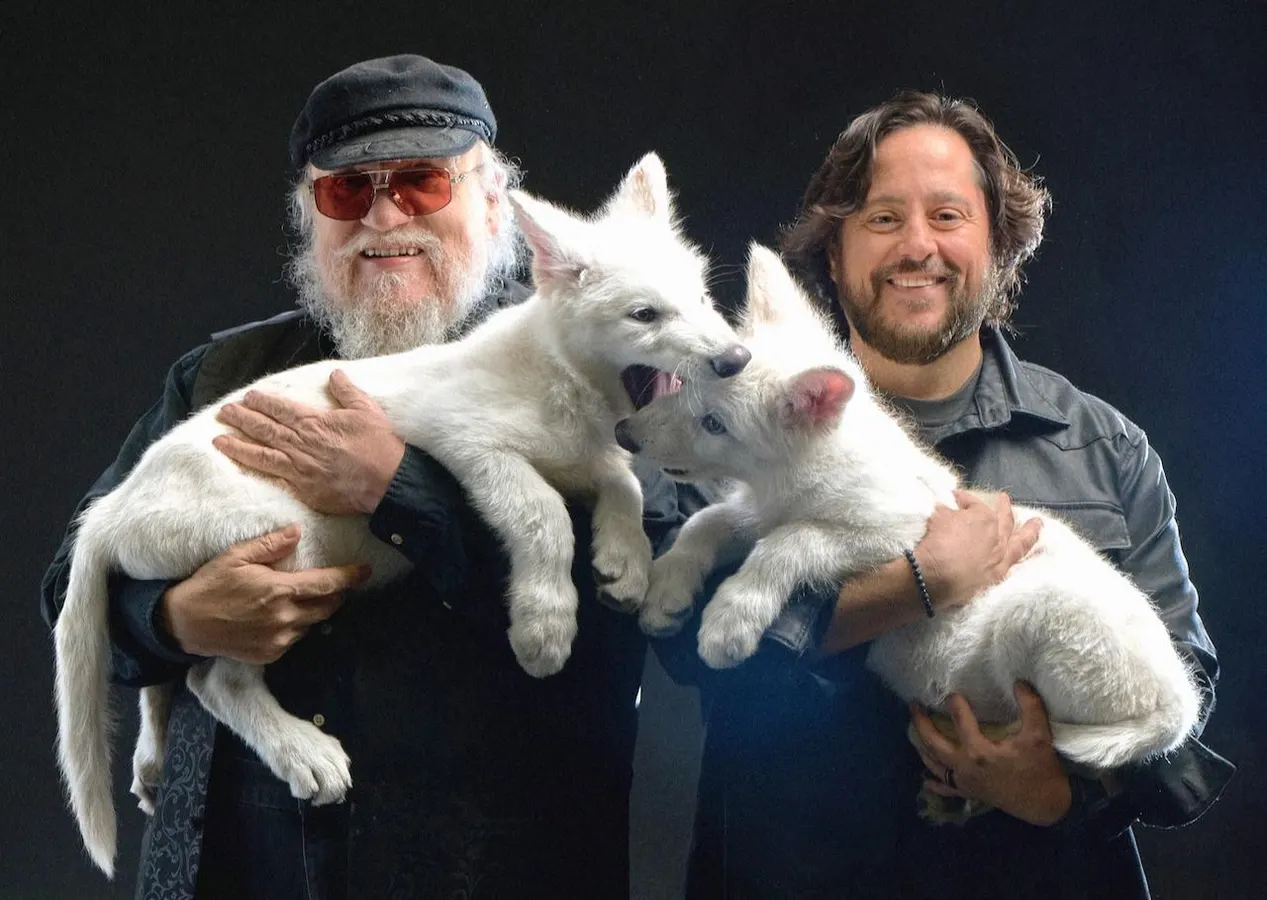
Even cultural figures have recognized the significance of this achievement. George R.R. Martin, author of the “Game of Thrones” series that popularized dire wolves in contemporary culture and a Colossal investor, remarked: “I get the luxury to write about magic, but Ben and Colossal have created magic by bringing these majestic beasts back to our world.”
This statement highlights the powerful cultural resonance of de-extinction, particularly for a species like the dire wolf that has captured the public imagination through popular media. The involvement of figures like Martin in supporting de-extinction science demonstrates how cultural interest can translate into practical support for scientific innovation.
Colossal Leadership Emphasizes Broader Impact
Colossal CEO Ben Lamm expressed pride in the team’s achievement while emphasizing its broader implications: “I could not be more proud of the team. This massive milestone is the first of many… Our team took DNA from a 13,000-year-old tooth and a 72,000-year-old skull and made healthy dire wolf puppies. It was once said, ‘any sufficiently advanced technology is indistinguishable from magic.’ Today, our team gets to unveil some of the magic they are working on and its broader impact on conservation.”
This statement positions the dire wolf achievement as part of a larger mission to develop technologies that can address biodiversity loss more broadly—not just bringing back extinct species but providing tools to prevent extinctions in the first place.
Scientific Community Focuses on Technological Applications
Within the broader scientific community, discussions have focused less on the novelty of reviving an extinct species and more on the technological capabilities demonstrated by the dire wolf project. The successful editing of 20 genetic variants in a single organism represents a significant advance in genetic engineering capabilities.
These techniques have potential applications far beyond de-extinction. The same approach used to resurrect the dire wolf could potentially:
- Rescue Genetically Impoverished Species: Many endangered species suffer from genetic bottlenecks that reduce their resilience. The precise gene editing demonstrated in the dire wolf project could potentially restore lost genetic diversity.
- Combat Emerging Diseases: Engineering disease resistance into vulnerable populations could help species threatened by new pathogens, such as amphibians affected by chytrid fungus or bats impacted by white-nose syndrome.
- Accelerate Adaptation to Climate Change: Some species may benefit from genetic modifications that help them cope with rapidly changing environmental conditions.
Colossal is already exploring some of these applications. The company’s scientists are working with the pink pigeon, a bird species suffering from severe genetic bottlenecks, to introduce greater genetic diversity into embryos through edited primordial germ cells, potentially improving the species’ health and viability.
Toward a Consensus on De-extinction Technology
While individual reactions to the dire wolf resurrection have varied, a consensus appears to be emerging around several key points:
- Technical Feasibility: The successful resurrection of the dire wolf demonstrates that de-extinction is technologically feasible, at least for species with relatively recent extinctions and living relatives.
- Conservation Applications: The technologies developed for de-extinction have immediate applications for endangered species conservation, potentially offering new tools in the fight against biodiversity loss.
- Ethical Care Standards: Colossal’s approach to housing and caring for the dire wolf pups establishes important precedents for the ethical treatment of de-extinct animals.
- Cultural Significance: Beyond the scientific achievement, bringing back extinct species can have cultural and spiritual significance, particularly for indigenous communities with traditional connections to these animals.
As Colossal continues to develop its de-extinction platform, with the woolly mammoth, thylacine, and dodo on the horizon, these expert reactions to the dire wolf project will likely inform both public perception and scientific approaches to future de-extinction efforts.
The dire wolf’s return marks a watershed moment in humanity’s relationship with extinct species—and the predominantly positive reactions from across the scientific community suggest that de-extinction technology may be moving from the realm of science fiction into mainstream conservation science.