

As the security industry becomes increasingly dependent on real-time analytics and digital tools, Solaren has carved a niche by balancing human judgment with artificial intelligence. Led by Jack Byrd, the company has made deliberate choices about how and when to implement AI-driven surveillance, ensuring that new technologies enhance rather than replace the value of trained personnel. This strategic equilibrium allows Solaren to offer clients robust, nuanced protection that leverages both machine efficiency and human decision-making.
A significant element of this dual approach is the integration of AI-enabled surveillance units developed through Solaren’s collaboration with LiveView Technologies. These units are designed for rapid deployment and remote monitoring, and include features like time-sensitive motion detection, facial recognition within designated timeframes, and live-streaming capabilities. Such systems allow Solaren to maintain oversight on wide-ranging sites without always requiring a static security presence. However, the company insists that these tools are meant to support—not substitute—its staff in the field.
Taylor Pepper, Solaren’s Director of Communications, emphasizes that human expertise remains irreplaceable in many scenarios. AI systems are monitored and interpreted by trained personnel who verify alerts, assess situational context, and decide on appropriate action. By investing in staff who can navigate both traditional and digital security landscapes, Solaren maintains a standard of responsiveness that exceeds what automation alone could achieve.
This philosophy extends to training programs that prepare employees for hybrid environments. Officers are not only trained in physical security techniques but are also taught how to interface with surveillance technologies, troubleshoot technical issues, and report findings accurately using mobile tools. This ensures a cohesive link between what the systems detect and how field officers act. Such preparation has been especially critical for large-scale deployments, where real-time responsiveness can determine the success of an operation.
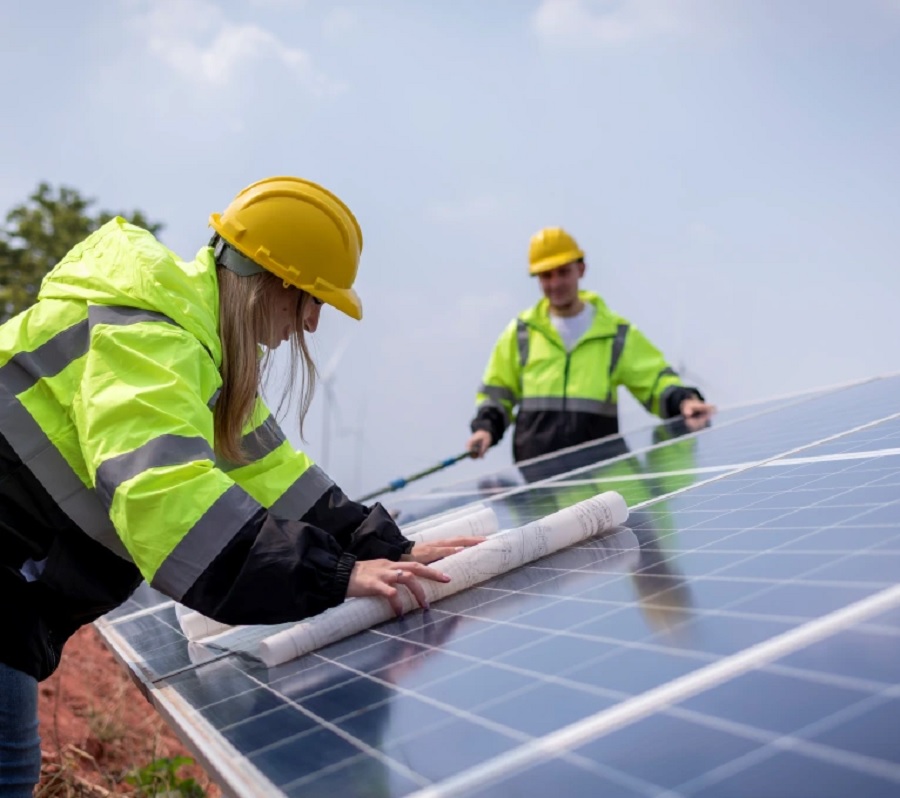
The success of this integrated model is visible in client feedback, particularly in deployments where AI-powered trailers are used in expansive spaces. Clients benefit from cost savings without sacrificing coverage or quality. The trailers are solar-powered, allowing for environmentally sustainable operations, and can be placed in locations where permanent infrastructure is not feasible. Yet, the presence of Solaren personnel reviewing feeds and performing site visits adds a critical layer of human interpretation and reassurance.
Solaren’s approach to combining AI and human oversight also proves beneficial in more complex scenarios, including cybersecurity explorations. The company has evaluated tools capable of detecting network intrusions within specific geofenced areas, reflecting a growing awareness of digital vulnerabilities in physical spaces. These explorations further highlight Solaren’s commitment to expanding its scope of services while maintaining control over quality and safety.
Through this measured adoption of AI, Solaren positions itself at the forefront of an evolving industry. Rather than chasing technology for its own sake, the company focuses on how each innovation supports its broader mission: delivering reliable, intelligent security. By empowering both systems and staff to work in tandem, Solaren not only meets modern client demands but also establishes a sustainable model for long-term growth in a sector defined by rapid change.